
 (855) 573-1435
DSL vs. Satellite Internet: Which is best for Remote Workers
Get a head-to-head comparison of fixed wireless internet vs satellite internet.


Rural America may not have the fastest fiber or cable internet connection as easily available as urban towns do; however, there are many reliable internet options powered by a DSL or satellite connection that keep users connected online.
If you're living outside the city and need a solid internet connection for remote work, including video calls, transferring large files, and real-time collaboration with your team, this blog will help you explore the top internet options in rural areas.
What to expect:
- DSL vs. Satellite Internet — how they work?
- Top DSL and satellite internet options
- Which is better suited for remote work?
Read on to find the best rural internet option for your remote work needs.
What We Discovered
- DSL internet is faster, and mostly offers unlimited data plans, compared to satellite internet with slower speeds and soft data caps
- Satellite internet is more widely available than DSL internet
- Satellite internet with LEO technology now offers faster internet with lower latency, and is a good option for remote workers in rural areas
- Both DSL and satellite internet have slower speeds compared to wired connections like fiber and cable; however, they offer a good alternative for remote users
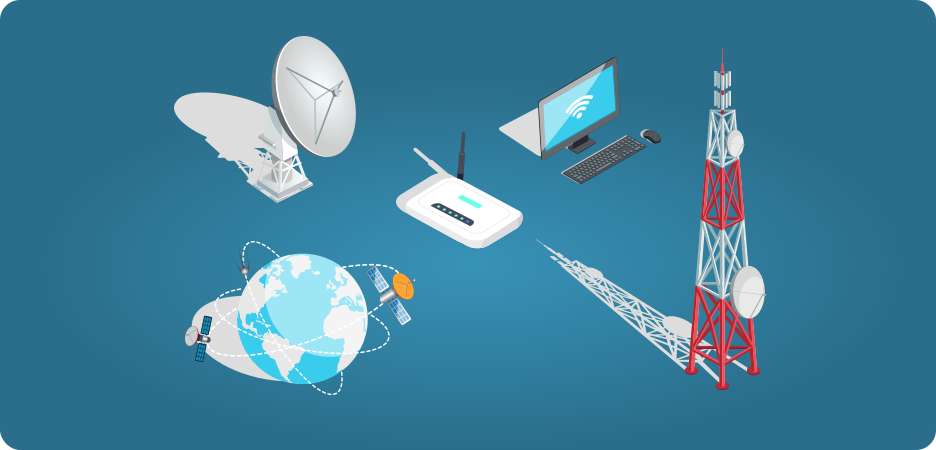
DSL vs. Satellite Internet — How They Work?
Here's a quick overview of a DSL connection:
- Uses telephone lines to deliver internet from the power station to your home
- Allows phone calls and internet signals to be transmitted at the same time through the same wiring
- Widely available as compared to fiber or cable internet
- Requires a modem to convert digital signals into an internet connection
Satellite internet, on the other hand:
- Uses signals transmitted by satellites up in space, which are received via satellite dishes installed on the ground
- Is a wireless internet connection, which does not depend on the availability of a wired network on the ground
- Available in all remote and rural areas irrespective of the geographical conditions
- Requires a satellite dish installed at your home to transmit signals to your devices
- Service may be affected by extreme weather conditions like rain, snowfall, thunderstorms, etc.
Top DSL and Satellite Internet Options
Top DSL Internet Plans


Top Satellite Internet Plans


DSL vs. Satellite — Which Is Better Suited for Rural Remote Workers?
Remote work usually involves constant communication over text and calls, video conferences, sharing and receiving large files, cloud-based tools usage, online research, and content creation. All these activities require a stable internet with consistent speeds. While neither DSL nor satellite internet is the ideal connection type for remote work, rural users are limited to these options only.
One of the drawbacks of both DSL and satellite internet is higher latency. Not sure how that may affect remote work? Understand all about latency and its effects.
However, both connection types are widely available and a reasonable solution to rural internet for remote workers in the country.
Choose DSL if you want:
- Budget-friendly internet plan
- Internet and phone bundle
- Greater bandwidth
- Generous data caps
Choose satellite internet if you want:
- Internet in an off-grid location
- Wireless internet
- Higher speeds (LEO satellite internet)
- Greater infrastructural reliability (less prone to on-ground damages)
Ready to choose a reliable rural internet? Talk to us!
Frequently Asked Questions
Is DSL internet cheaper than satellite? ![faq arrow icon]()

Yes, DSL internet is cheaper compared to satellite internet because of the lower infrastructure cost. Satellite internet uses satellites up in space, which require a greater budget to maintain and are hence more expensive.
Is DSL internet faster than satellite? ![faq arrow icon]()
Yes, DSL internet is generally faster than satellite internet; however, newer LEO satellites offer faster speeds and reduced latency, which delivers a more seamless internet connection. Furthermore, some satellite internet providers offer a satellite + fixed wireless plan like the Hughesnet Fusion plan, which is faster than DSL internet.
What are the available internet options in rural areas? ![faq arrow icon]()
Rural areas often do not have complex wired connections; however, reliable internet options like DSL, satellite, and fixed wireless internet offer a solid internet solution to remote users.
Table of content
 Detailed Provider Comparisons
Free On-Call Consultation
Top Internet Deals
Recent Articles

How to Speed Up Cable Internet?
Discover ways to optimize and improve the performance of your cable internet as recommended by industry experts
Read more
Best Modem for Cable Internet - Complete Guide
Check out our list of best modems for cable internet for optimized internet performance
Read more
What is Cable Internet & How is it Different from Others?
Discover all about cable internet and learn how it compares to other connection types
Read more

Best Modem-Router Combos for Cable Internet
Check out our roundup of the best modem-router combos for cable internet for better and solid internet performance
Read more
Table of Content